AI safety moves from warnings to rules, contracts, and oversight
OpenAI called for mandatory safety rules, educators secured contractual AI protections, and new systems reached elections, health, and cell biology.
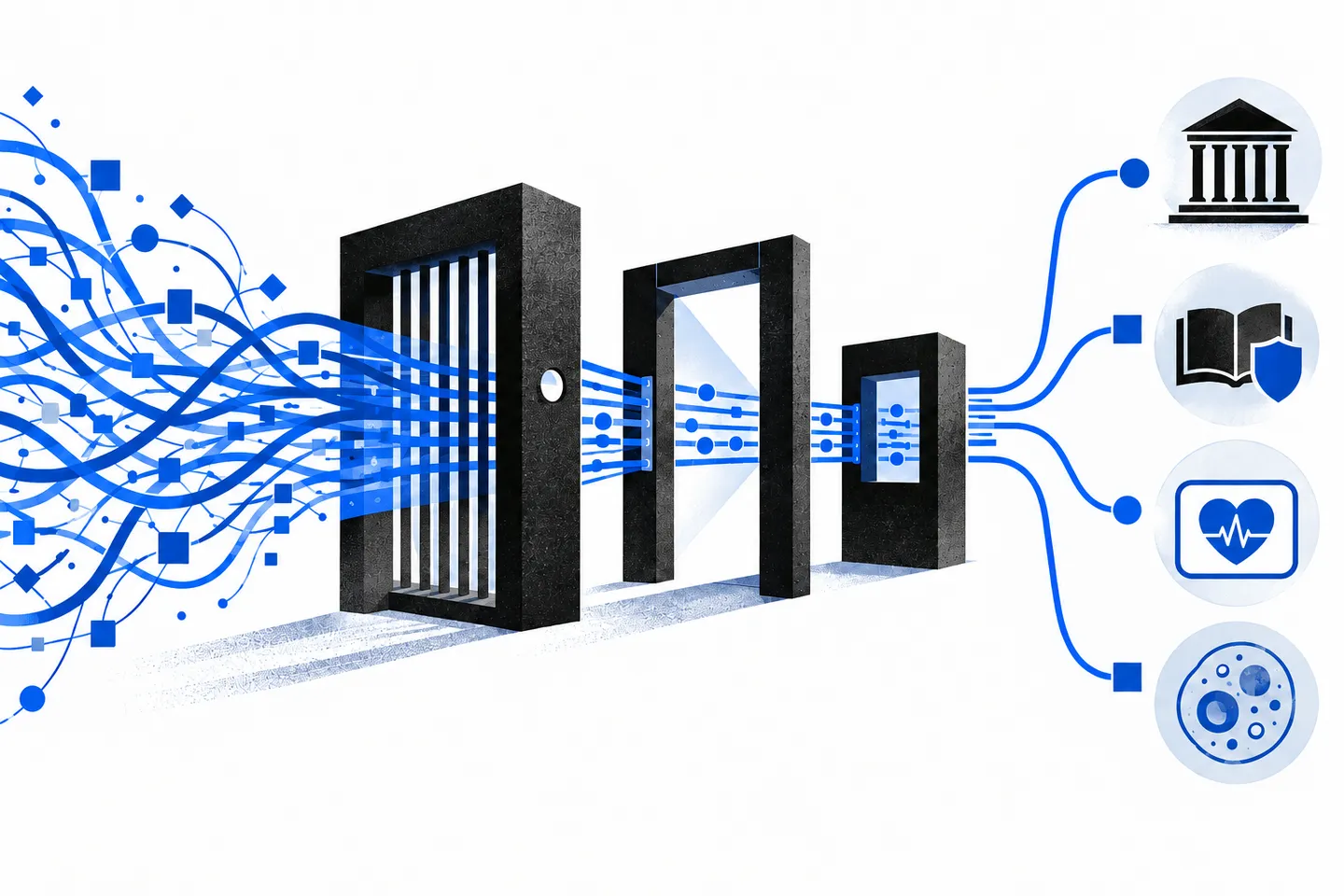
OpenAI asks lawmakers to set mandatory safety bars
OpenAI called for mandatory, capability-based US safety regulation covering common tests, independent assessments, cybersecurity, and incident reporting. It also backed four California bills on independent safety assessments, auditor standards, protections for young people, and biological risk. The company said governments and labs should agree on thresholds for slowing or stopping development when safeguards cannot keep pace.
On the same day, OpenAI appointed alignment researcher Paul Christiano to its Foundation board and Safety and Security Committee; he will also be a non-voting observer on the company board. The policy position and appointment increase formal oversight, but they do not by themselves establish that any particular safety threshold is adequate or enforceable.
School AI protections become contract terms
The American Federation of Teachers, United Federation of Teachers, and Microsoft announced a National AI Safety & Privacy Standard for schools. US districts can ask to incorporate its protections into Microsoft customer agreements, making violations a contractual issue rather than a voluntary promise.
The 31-page agreement bars covered student and educator data from general model training, sale, or profiling; requires data minimization, human oversight, and plain-language disclosures; and gives districts control over retention and deletion. A narrow safety exception permits limited processing to detect or prevent harms. The standard applies to education-focused AI products, not every general-purpose tool a school might license, an important boundary for districts to examine.
China disputes US model-distillation allegations
China’s Commerce Ministry rejected allegations that Chinese AI companies are running malicious, industrial-scale distillation campaigns against US frontier models. The Associated Press reported that the ministry called distillation a common industry practice and threatened countermeasures if Washington penalizes Chinese developers.
The response followed a joint NSA, FBI, and CISA advisory alleging that companies distribute requests across providers and infrastructure to evade detection and extract restricted capabilities. The agencies named DeepSeek, Alibaba, Moonshot AI, and Z.ai. The advisory presents the US government’s assessment; China denies its characterization and intent.
Apple puts AI inside longitudinal health tracking
Apple announced a redesigned Health app that uses Apple Intelligence to produce personalized summaries and recommendations from heart, sleep, fitness, vitals, and cycle-tracking data. A new Health Age feature compares longitudinal metrics with chronological age, while vision models guide at-home movement assessments. Apple says those camera assessments run on-device without recording or sharing video.
The app is due later this year, initially in US English. Apple describes the outputs as wellness guidance, not medical care, and notes that some server-based AI features have daily limits. Those qualifications matter when model-generated interpretations sit beside clinical records and biometrics.
AlphaFold points biologists to a cellular off switch
Cornell researchers used AlphaFold interaction predictions to shortlist possible partners for Arf1, a protein that controls cellular transport, then validated the candidates experimentally. Their peer-reviewed paper identifies Avl9 as a GTPase-activating protein that switches Arf1 off and suggests a broader family of related regulators.
The AI system generated leads rather than the conclusion. Cornell’s account details follow-up tests using mutated proteins and human lung-cancer cells. The result is a useful example of structure prediction narrowing a search space while laboratory evidence carries the biological claim.
Google adds AI provenance tools to its election plan
Google said it is rolling official voting information into Search’s AI Mode and AI Overviews as well as Gemini ahead of the US midterms. Its election plan also points users to SynthID checks in Gemini, Search, and Chrome, requires political advertisers to disclose synthetic or altered content, and labels creator-disclosed or automatically detected AI material on YouTube.
The company also said candidates and journalists can request removal of AI imagery using their likeness on YouTube. These measures describe Google’s policies and tooling; their practical value will depend on detection coverage, clear labels, and consistent enforcement during the campaign.