OpenAI launches Decisions API as enterprise and agent standards work expands
October 22 brought OpenAI's Decisions API and new enterprise deployment examples, plus Anthropic's transfer of Agent Skills to a foundation and a life-sciences collaboration call.
Overnight AI · Audio briefing
OpenAI launches Decisions API as enterprise and agent standards work expands
OpenAI makes its Decisions API generally available
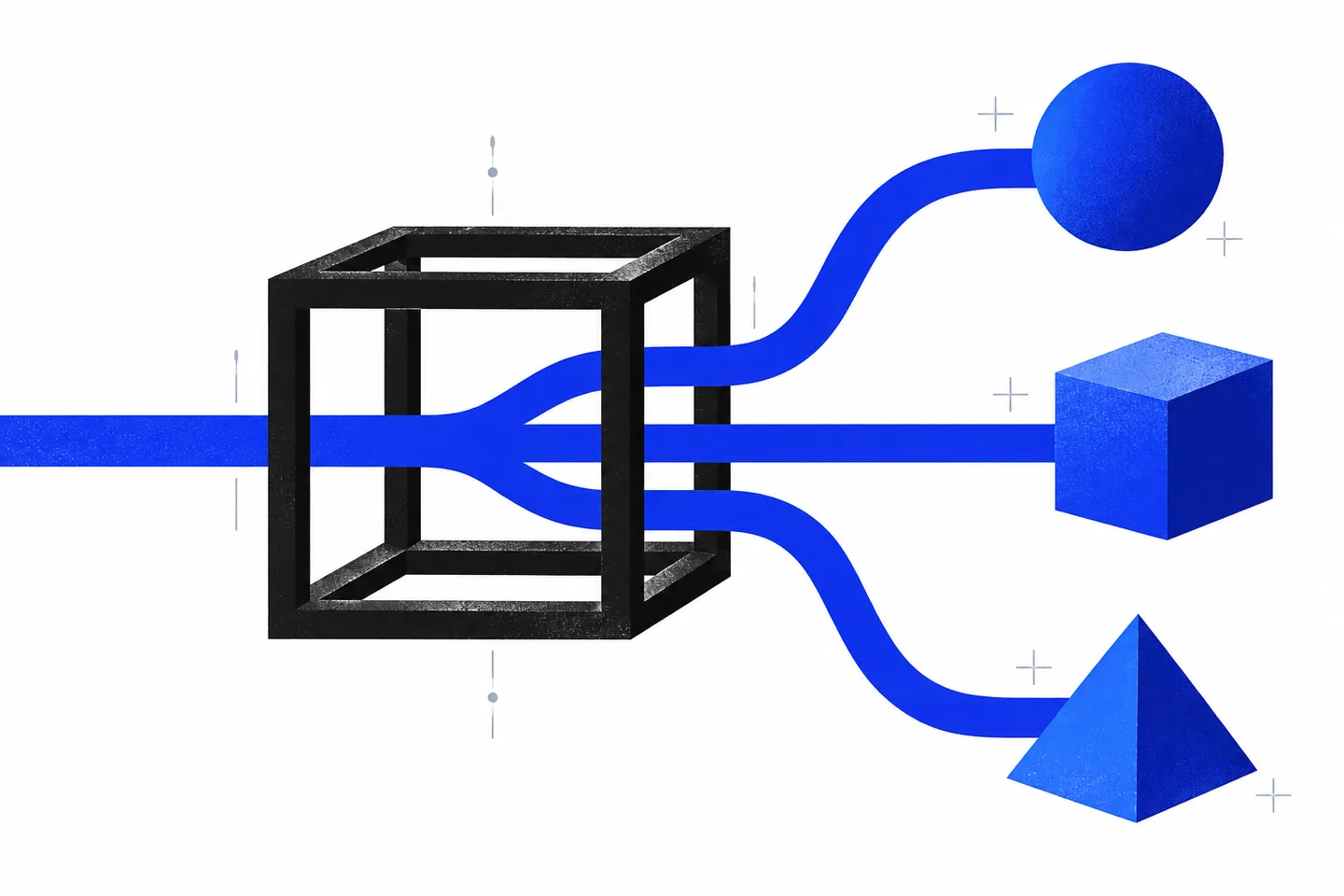
OpenAI made its Decisions API generally available with GPT-6 Luna. The endpoint is for bounded choices rather than open-ended generation: developers provide a question, allowed answers and context, then receive a probability, choice or score. OpenAI says it can process text, images and native JSON, now accepts as many as 400 questions in a request, and has US and EU inference residency.
The company says the dedicated endpoint is up to ten times faster than using GPT-6 Luna through the Responses API. That is an OpenAI performance claim, not a general comparison of model quality. OpenAI lists input pricing of $0.10 per million tokens, $0.01 per million cached-input tokens and no output-token charges; eligibility for zero data retention has its own conditions.
Forward-deployed engineering focuses on production gaps
OpenAI also described its forward-deployed engineering group, which embeds with customers to turn model capabilities into production systems and feed real-world limitations back into product and research work. In one unnamed semiconductor engagement, the company says AI-assisted directed-test generation saved about 48% of time and kernel optimization improved median performance by 22%.
Those figures come from OpenAI’s account of its own work. Its more useful caution is that a benchmark result is not automatically a reliable deployment: the company says customer constraints, evaluations, integrations and operational feedback can be the missing work between a capable model and a working system.
Uber expands ChatGPT Work company-wide
Uber said it is rolling ChatGPT Work out to more than 30,000 employees, after a 1,000-person pilot. The company describes the agentic platform as its first company-wide agent deployment tailored to knowledge work; it can connect to tools including Google Drive, Gmail, Google Calendar and Slack for tasks such as research, meeting briefs, presentations and data analysis.
OpenAI says GPT-6.1 Sol will be the default capability in the rollout, while Uber will support it with an internal skills library, approved integrations and employee training. The companies say they plan to publish further adoption and outcome information as the rollout progresses, so it is too early to infer company-wide productivity results.
Anthropic gives Agent Skills a foundation home
Anthropic donated Agent Skills, its open specification for folders containing a SKILL.md file and supporting material, to the Agentic AI Foundation under the Linux Foundation. Anthropic says more than 70 agent platforms, including ChatGPT, Cursor, GitHub Copilot and VS Code, have integrated the standard since its December 2025 publication.
The company says the donation includes the name, logo, GitHub organization and domain, while engineers from Anthropic, Google, OpenAI and other companies will maintain the standard as individuals. It says one million skills have been published and nearly 280 million installed. Anthropic proposes versioned releases, a formal proposal process and security guidance, but those are a proposed roadmap rather than finalized governance rules.
Anthropic invites life-sciences project proposals
Anthropic opened an approximately 14-day application window for principal investigators and research groups at academic institutions, nonprofits and government laboratories. Selected guest investigators would work with Anthropic researchers for eight to twelve weeks on projects in areas including causal human biology, molecular biology, medicinal chemistry, drug discovery and clinical science.
Anthropic says it will run models and harnesses at no cost, publish outputs and open-source accompanying data and code with collaborators, while investigators retain rights to their data and independent follow-on research. The program seeks preliminary evidence within the collaboration period; it is not a claim that short AI-assisted projects can validate open biological questions on their own.